The Cost Transparency Of The PAT Top 10 Things You Must Know in Derby
In the UK, there is significant variation in pricing for Portable Appliance Testing Services (PAT). Transparency in pricing is an essential aspect when selecting a trustworthy and trustworthy service provider. Prices for PAT Testing vary based upon a myriad of variables, including the amount of equipment being tested, the test's complexity, the area of the test and the degree of knowledge offered by the service providers. Transparent pricing covers more than just the price of an item. It considers all ancillary costs that could be incurred, service definitions, as well as long-term values. It is vital for employees who are subject to the Electricity at Work Regulations, 1989 to fully comprehend the cost picture. This will not only aid in budgeting, but also ensures that price considerations do not affect the quality or conformity. A truly transparent provider will clearly articulate what's included in their quote, what might incur additional costs, and how their pricing structure is aligned with a risk-based, regulated approach to electrical equipment safety.
1. Per-Item Pricing vs. Fixed-Price Contract Models
The two primary pricing models are utilized by the majority of PAT providers. The per-item model charges an agreed price for each appliance examined (e.g. between PS1.50-PS3.50). This may be an affordable option for smaller businesses who have fewer appliances. Fixed-price agreements are based on an annual cost that includes the entire services. It is preferred by businesses with large numbers of assets because of its financial security. A clear provider will outline each option and suggest the most cost-effective model to suit the specific needs of the client by clearly stating what's included in each item, or fixed price.
2. Rates for appliances and Risk Categories in Derby
Professional providers don't charge an unbeatable flat fee for every appliance. Transparent pricing reflects variations in risk and effort in different kinds of equipment. The most basic IT equipment (Class II) in a workplace generally has the lowest cost. More complex, high-risk, or difficult-to-access equipment (e.g., industrial equipment commercial catering equipment, medical devices, or appliances that require removal) will cost more because of the extra time, expertise and risks that are involved. The quotation should clearly classify appliances and use the appropriate pricing tiers.
3. The price quoted includes an extensive description of the items included in Derby
Transparency requires a thorough breakdown. It must state whether the quoted price includes the following physical inspection, electronic tests, the application of labels to indicate passed or failing, a complete document with a written certificate of conformity, and an in-depth asset statement. The price must also include VAT. Sometimes, quotes seem cheap because they exclude these essential components. Then, the cost is increased by adding them on as an extra cost.
4. Other and potential hidden charges in Derby
A transparent company will reveal any additional charges prior to the time of purchase. These include:
Call-out fees: A minimum cost for visiting a website that is particularly pertinent for sites with a small number of appliances. in Derby
Mileage fees: For sites situated some distance from the engineer base. in Derby
Re-test costs are the cost to test an appliance after its repair. in Derby
Administrative fees: Charges for producing duplicate certificates or reports. in Derby
Fees outside of hours The cost of testing that is performed outside normal business times.
The estimate should include these additional costs and the possibility that they could occur.
5. Prices for Remedial Work and Repairs in Derby
The cost to fix any faults that are found during the testing is a critical area to ensure transparency. The provider should have a clear, upfront price list for standard repairs like replacement of plugs, fuse replacement and cable repair. Also, they should describe how to obtain the consent of customers prior to completing any repairs that are paid for. Some providers incorporate a simple first-line repair (like replacing a plug) into their testing cost that should be clearly defined.
6. Cost implications of risk-based testing Methodologies in Derby
Modern PAT services are based upon a risk analysis, not a standard annual test. Service providers who are transparent will speak about the costs of applying this method. They could propose longer intervals of formal testing for items with low risk (e.g. double-insulated equipment for offices), combined with visual inspections. These can help reduce the cost of long-term maintenance compared to companies that insist on periodic testing. The quote should reflect this risk-based, specific frequency.
7. Equipment Calibration Costs and Their Inclusion
To ensure the accuracy of the provider's PAT test testers need to be calibrated by a UKAS accredited laboratory each year. This is a expense that must be borne by the company. Transparent providers will verify that calibration costs are included in their quote and that their equipment is current and calibrated. The provider should be willing to produce proof of calibrating on request. The provider may have cut corners on the quality assurance procedures if their quote seems low.
8. Experience and qualifications premium in Derby
The expense of the technician has to be included in the price. A technician who has City & Guilds 23,77 certification with a wealth of experience and a profound understanding of IET Code of Practice could be billed a premium by a provider. Transparency means that the provider can explain the benefits of their technicians' expertise that results in a strong and defended compliance result.
9. Discounts for bulk orders and pricing for multiple sites in Derby
For organisations with multiple Derbys or large numbers of appliances, clear providers can provide a clear volume discount structure or a customized pricing structure for multi-site contracts. This should be included in the quote and include information about discount thresholds and how the pricing is to be spread across all sites. This will make it easier to procure and provide cost efficiency to large clients.
10. Time-frames for Validity of Quotes and Price Guarantee Conditions in Derby
The final aspect of transparency is the clarity of the terms used in the quote itself. The contract should specify its validity period (typically 30 to 60 days) to protect the client from price increases following acceptance. The document should also include any price guarantee, indicating whether the quoted per-item rates or a fixed price will be kept throughout the contract period. This avoids unpleasant surprises, as well as providing accurate financial planning. Check out the most popular compliance services in Derby for blog advice.
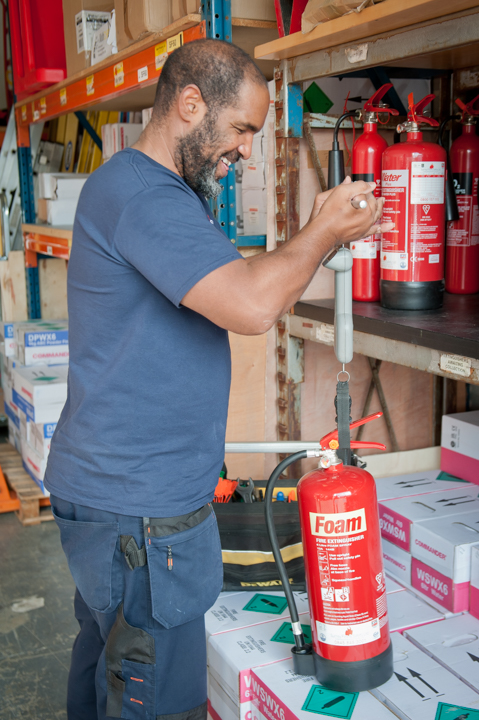
Ten Tips To Ensure The Regulatory Compliance In Fire Extinguisher Maintenance in Derby
The UK regulatory framework for fire extinguisher services is a broad system designed to ensure safety and reliability of the equipment through clearly defined legal requirements along with technological standards, and certification programs. Fire extinguisher servicing is governed by strict legal obligations which are defined in the Regulatory (Fire Safety) Order of 2005. Technical standards and third party certification programs provide a clear compliance PAThway. This multilayered approach puts the primary responsibility for keeping a building in good repair on "the responsible person". The framework also provides guidelines for showing diligence. Understanding this framework, not only to maintain legal compliance but also to ensure that fire safety equipment will work as expected when emergency situations arise, is essential.
1. The Regulation Reform (Fire Safety) Order 2005 (FSO) in Derby
The Fire Scotland Act of 2006, and similar rules in Northern Ireland and Scotland, provide the foundation for laws governing fire safety in England and Wales. Article 17 specifies that all fire-fighting equipment must be "subject to a proper maintenance program and maintained in a state of efficiency and in a good working condition and in good repair." The Order places the burden for this on the "Responsible Individual" (usually the person who employs them, the owner or the person who occupies the premises). The person who is responsible for this is legally responsible for ensuring the proper maintenance regimes for every piece of fire protection equipment such as portable extinguishers are in place and maintained.
2. British Standard BS 5306-3 : 2017
This standard is a technical framework to comply with the FSO. It details the specific requirements of installing and maintaining portable extinguishers. It outlines the various service types: basic service (annual visual inspection and simple inspections) as well as extended service (discharge test and internal examination every five years for foam, water extinguishers made of powder and foam), and overhaul (pressure test and internal examination every 10 years for CO2 extinguishers). In order to meet the requirements of law, compliance with BS 5306-3 must be proven.
3. Third-Party Certificate Schemes (BAFE Sp101) in Derby
Although it's not a legal requirement, choosing a provider who is BAFE-certified SP101 (British Assurance for Fire Equipment) provides the most reliable evidence of due-diligence. This scheme of certification, which is accredited by the UKAS, independently validates whether a business meets stringent standards for the expertise of technicians, their work quality, business processes, and equipment. BAFE certifications are regarded by insurance companies and courts for their strong evidence that the FSO's standards have been satisfied. They enhance the role of the Responsible Person.
4. Fire Risk Assessment and Its Function in Derby
The Fire Risk Assessment (FRA) is the dynamic document that guides all decisions regarding fire safety that are related to the servicing of extinguishers. It is required to identify the correct fire-fighting equipment, establish its appropriate type, size, and Derby, and determine the necessary maintenance regimen. It is important to review the FRA regularly, particularly if the circumstances change. Any changes should be recorded in the schedule of service. The servicing provider's reports often provide valuable input to the reviews.
5. Documentation and proof requirements in Derby
It is vital to supply detailed documentation to prove compliance. After every service, the provider must issue a detailed report including details of the company, engineer information, the date of the service, list of equipment to be serviced, the kind of service that was performed, and any recommendations or faults identified. These documents are to be available for inspection at all times by enforcement authorities including Fire and Rescue Services and insurance companies. In the absence of documentation, even if service has been performed an enforcement action may be taken.
6. Sanctions and Enforcement Mechanisms in Derby
Local Fire and Rescue Authorities perform compliance audits, and also have authority to enforce. For non-compliance with servicing requirements they may issue Alterations Notices (requiring changes to the fire safety measures), Enforcement Notices (mandating specific changes within a timeframe) as well as, in more serious situations, Prohibition Notices (restricting or the closure of a premises immediately). In serious cases, the courts can impose a maximum amount of penalties and imprisonment of up to 2 years for any violation.
7. Insurance implications in Derby
Commercial insurance policies typically need compliance with fire safety legislation as a requirement of the policy. Inadequate servicing records or using companies that are not compliant can void insurance coverage following a fire incident. Insurance assessors frequently request servicing documentation during claims processing, and insurers might require specific standards for certification (like BAFE SP101) as a condition of coverage, particularly for high-risk buildings or commercial policies with large amounts.
8. Technical Competencies in Derby
The FSO stipulates that maintenance must is carried out by a trained person. While not legally defined, competence generally includes: formal training on BS 5306-3, manufacturer-specific equipment training, practical experience, and understanding of relevant regulations. Through regular assessments and audits Third-party certification schemes such as BAFE SP101 test the competency of technicians.
9. Environmental Compliance in Derby
Environmental legislation governs the proper disposal of extinguishers which were decommissioned as well as other trash. This includes specifically, the Environmental Protection Act (1990). Service providers have to be registered waste haulers and offer Waste Transfer Notes for disposed equipment. Responsible Persons must ensure their disposal provider is legally compliant since they have the ultimate responsibility for ensuring the disposal of their waste properly, with potential penalties for not complying.
10. What is the frequency and extent are services required? in Derby
The frequency of service required by BS 533-3 must be observed the following: annual basic maintenance for all extinguishers; an extended maintenance every five years for the foam, powder and water types and overhauls every 10 years for CO2 units. Furthermore, the Responsible Person must ensure that monthly visual inspections are conducted (often assigned to staff) to identify obvious issues like obstruction or damage, as well as pressure loss. The combination of user inspections as well as professional services makes a full maintenance plan. Have a look at the recommended Derby fire safety for site tips.